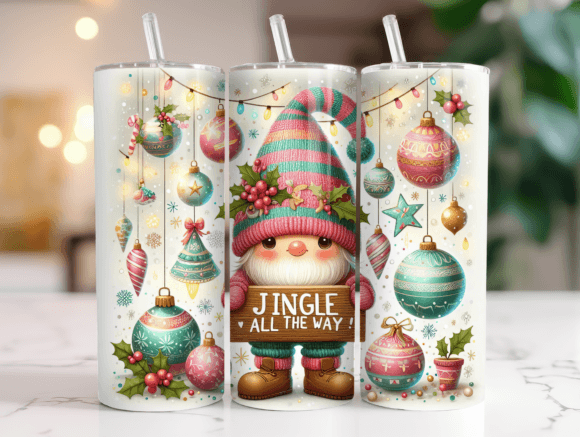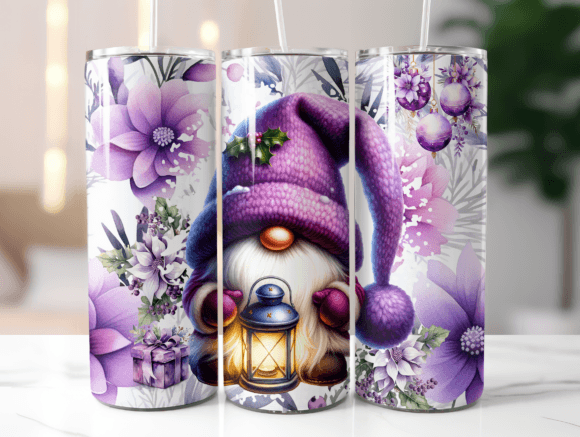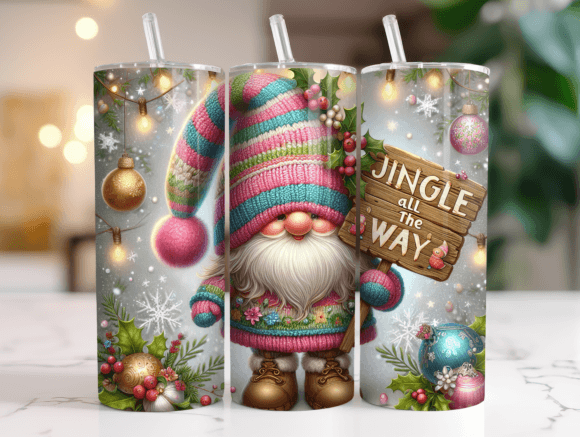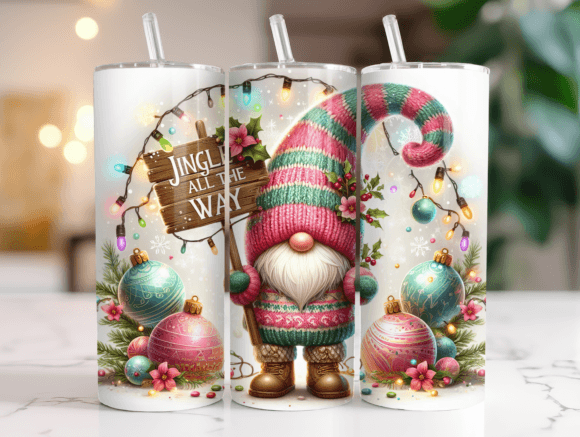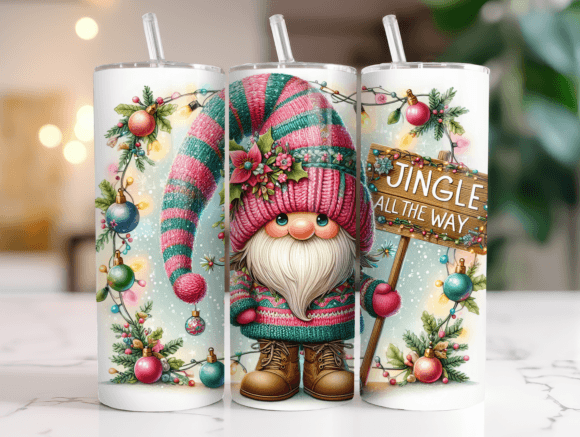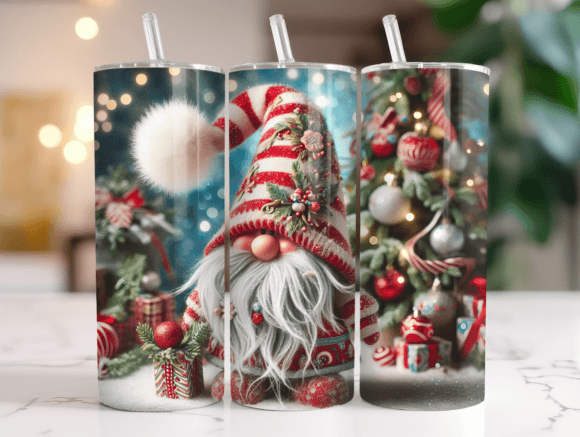
Christmas Gnome 20 Oz Tumbler Wrap
A Designer’s First Look: Cheerful, Compact, and Ready for Holiday Stitching
When I opened the Christmas Gnome 20 Oz Tumbler Wrap, my first thought wasn’t “cute”—it was “practical.” The composition is tight but not cramped: a single gnome centered with soft curves, a jaunty hat, a stitched-on beard suggestion, and subtle holiday accents—no overbearing snowflakes or tangled holly. It reads clearly at a glance, which matters when you’re embroidering onto a curved surface like a tumbler sleeve—or adapting it for a tote bag or baby onesie. As a designer who regularly converts wrap graphics into machine embroidery designs, I appreciated how the layout avoids sharp corners and thin connecting lines that fray or vanish in satin stitch. This isn’t just festive—it’s fabric-conscious.
Where This Design Truly Shines (and Where It Needs Thought)
I tested the Christmas Gnome 20 Oz Tumbler Wrap as the centerpiece of a custom embroidered linen tea towel for a local boutique’s holiday pop-up. On smooth, medium-weight fabric with light tear-away stabilizer, the design held crisp edges and balanced fill-stitch density—no puckering, no thread nesting. It worked beautifully on sweatshirt cuffs, too, where the gnome’s compact height (roughly 3.5” tall) kept proportions friendly next to ribbed knit. For Etsy sellers offering personalized gifts, this is a strong candidate for baby embroidery—think onesies or burp cloths—because the shape avoids tiny limbs or fussy details that get lost under dense stitching.
That said, I’d hesitate to use it straight from the file on stretchy fabrics like jersey or textured surfaces like heavy canvas without adjusting stitch order or adding underlay. The beard and hat brim rely on fine satin-stitch definition; on dark fabric, low-contrast thread colors could mute those features unless you manually adjust digitizing settings or choose high-sheen threads. And while it’s labeled a *Tumbler Wrap*, don’t assume it’s optimized for curved hoops out of the box—many AI-enhanced graphics still need manual hoop alignment checks before running on caps or mugs.
Real-World Fit: From Craft Fair Booths to Digital Product Lines
Last week, I adapted the Christmas Gnome 20 Oz Tumbler Wrap into an embroidered patch for a small shop’s holiday aprons. With minor simplification of internal highlights and added tack-down stitches around the base, it translated cleanly—and customers responded immediately. Why? Because the gnome feels handmade, not mass-produced. That warmth transfers directly to your finished product. Whether you’re selling embroidered pillow covers on Etsy or building a cohesive holiday collection for your craft business, this design supports brand consistency without demanding perfect symmetry or rigid spacing.
It also works well as a digital embroidery file preview asset. I dropped it into a printable mockup for a ceramic mug listing—and buyers commented that it looked “like something I’d actually stitch myself,” not a generic clipart overlay. That trust factor matters. When customers see clean lines, intentional negative space, and balanced weight (note how the gnome’s hat tilts just enough to imply motion), they read professionalism—even before they click “add to cart.”
What to Check Before You Stitch (Especially If You’re Selling)
Before cutting fabric or uploading to your embroidery software:
- Test on scrap first—especially if using textured or lightweight fabric. Watch how the beard and hat brim hold up under tension.
- Review stitch density. High-density areas may need reduced fill angles or added underlay on knits or fleece.
- Confirm hoop size compatibility. While the design fits comfortably in a 4x4 hoop, double-check whether your machine handles the full width without re-hooping—critical for seamless tumbler wraps.
- Inspect small details in black-and-white mode. Does the gnome’s face still read clearly without color cues? If not, consider simplifying or adding a subtle running-stitch outline.
- Compare light vs. dark fabric backgrounds in your mockups. Some AI-enhanced graphics lose depth on black fabric unless thread contrast is intentional.
- Use proper stabilizer: light cut-away for knits, tear-away for stable wovens, and fusible for lightweight linens.
Commercial Use & Licensing Reality Check
This listing clearly states it’s a digital file—not physical—and notes it’s AI-generated, edited, and enhanced in Photoshop. That means you’ll need to verify licensing terms yourself before reselling finished embroidered items or bundling the file into your own digital embroidery collection. Many designers assume “instant download” includes commercial rights—but that’s not automatic. If you’re an Etsy seller or craft fair vendor, always confirm whether redistribution, derivative work, or resale of stitched products is permitted. When in doubt, reach out to the creator or treat it as personal-use-only until clarified.
Final Thoughts: A Thoughtful, Seasonal Workhorse
The Christmas Gnome 20 Oz Tumbler Wrap isn’t flashy—but it doesn’t need to be. It’s a reliable, mood-lifting design that respects both the embroidery process and the buyer’s eye. It performs well across custom apparel, holiday gifts, and small shop merchandise because it prioritizes clarity over clutter. For makers who value efficiency without sacrificing charm, it’s a smart addition to your seasonal design assets. Just remember: even the best digital embroidery file is only as strong as your test stitch, your stabilizer choice, and your attention to how it lives on real fabric—not just on screen.